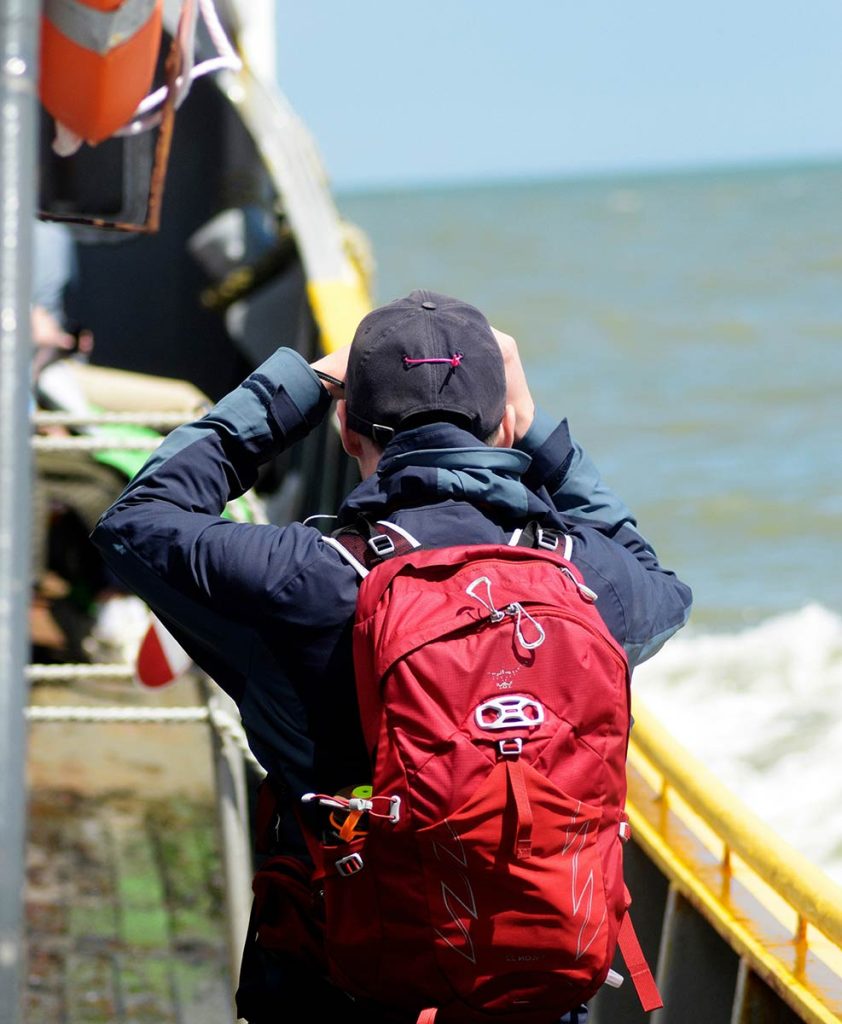
Day packs for hiking can range in size. They can be small enough to take for a day’s trek, or they may be large enough to take on a weekend hike. These day packs are designed such that the weight is mostly carried on your shoulders, and there are great designs that will provide you with comfort even when carrying heavy weights. If you’re hiking in Scotland, especially on the islands, your day pack often doubles as your ferry travel bag. Whether you’re boarding a ferry or hopping between smaller islands, you’ll want something compact, easy to carry, and practical in crowded ferry spaces. The primary consideration when buying day packs is your comfort when carrying heavy weights for a day’s hike. A day pack that has extra features may be fun, but ultimately, you want one that is easy to carry with minimal effort.
What to Look for in a Hiking Day Pack
The following are some of the features that you should be looking for when buying day packs for hiking to ensure maximum comfort:
- Shoulder pads that have been curved so that they do not chafe your skin
- Padded shoulder straps
- Padded backs
- Wide waist belt that is adjustable
- Materials that are breathable and porous against your back
For Scottish conditions, also consider:
- Quick-access compartments (useful when boarding ferries)
- Water-resistant materials (sea spray + sudden rain are common)
- External straps for wet gear after coastal hikes
Versatility Matters (Especially When Travelling by Ferry)
If you want your day pack to be versatile, meaning it can be used for carrying other items such as books, as well as being useful for hiking, then consider purchasing a backpack with a reinforced bottom. This becomes particularly useful if you’re travelling on foot via ferry to remote islands where your day pack may need to handle transport, food supplies, and extra layers all in one.
Choosing the Right Size
You should choose a backpack that is large enough to carry all the things that you will need on your day hike, and not be so large that there is still room left in the bag when you have packed it. If your hike involves a ferry crossing, pack slightly smarter rather than bigger. Space onboard can be limited, and a compact, well-organised bag is far easier to manage than an oversized one.
Weight Distribution & Comfort
Whenever possible, the lumbar waist backpack is a good choice for day hiking. It puts the weight on the strong part of your body, the hips, so your shoulders don’t become strained or injured. This is especially important if your journey includes walking on and off ferries, navigating harbours, or covering distance between ports and trailheads.
Don’t Use a Basic Urban Backpack
Hiking requires extra features on a daypack, so don’t be tempted to buy an everyday urban daypack for hauling gear outdoors. In coastal Scotland, conditions can change quickly, and ferries won’t wait for you to repack. A proper hiking day pack ensures you’re always ready to move comfortably and efficiently.
How to Wear Your Rucksack Properly
Some further tips on wearing a walking rucksack to ensure maximum comfort
- Begin by loosening all the straps.
- Making sure you keep your back straight, carefully lift the bag onto your shoulders.
- Make sure you are standing up straight.
- Tighten the hip belt, making sure it’s not on top of or below your hip bones.
- Really, your shoulders should not be taking more than about 20% of the weight. If it feels like they are, adjust the shoulder straps so that they fit more closely until you redistribute more of the weight to the hips
- If the rucksack has a chest strap, adjust it properly so that it can pull the shoulder straps together. This allows your arms to move more freely and brings the weight closer to your body.
- When packing the bag, try to distribute items evenly, and you’ll be better balanced if the heavier items are at the bottom.
Final Tip: Waterproofing is Essential in Scotland
Finally, remember that rucksacks will not remain waterproof after a few hours in the rain. This is particularly important when travelling by ferry in Scotland, where exposure to wind, sea spray, and sudden downpours is common. Rucksack liners and waterproof covers are a worthwhile investment.