If you’re planning a trip to Orkney, choosing the right ferry route is one of the first real decisions you’ll make—and it matters more than most people expect.
On a map, the difference between Scrabster and Gills Bay doesn’t look like much. Both sit on the north coast of mainland Scotland, and both offer relatively short crossings to Orkney. But in practice, the choice affects your travel time, your comfort, your arrival point, and even how your trip feels from the very beginning.
For many visitors—especially those travelling with a car—this isn’t just a logistical detail. It shapes the entire journey.
Most travellers end up deciding between two routes: Scrabster to Stromness, or Gills Bay to St Margaret’s Hope. This guide takes a proper look at both, so you can choose the one that actually fits your trip.
Two Routes, Two Different Experiences
The Scrabster route, operated by NorthLink Ferries, is often seen as the traditional way to reach Orkney. The crossing takes around 90 minutes and brings you into Stromness, a historic harbour town on the west mainland.
Arriving in Stromness feels like a proper introduction to Orkney. You sail directly into a working harbour, with stone buildings lining the waterfront and a clear sense that you’ve reached somewhere distinct and remote. For first-time visitors, that arrival experience can be a real highlight.
The Gills Bay route, run by Pentland Ferries, is more straightforward. The crossing takes about an hour and arrives at St Margaret’s Hope, a quieter settlement on South Ronaldsay. From there, you’ll continue your journey by road, crossing the Churchill Barriers to reach the Orkney mainland.
It’s less dramatic as an arrival, but more direct in practical terms—especially if you’re heading towards Kirkwall or the eastern side of the islands.
The Crossing Itself: Time vs Comfort
If your priority is getting across as quickly as possible, Gills Bay has a clear advantage. The crossing is shorter, and in good conditions, the journey feels quick and efficient.
However, the onboard experience differs significantly between the two routes, and this is where many travellers notice the biggest contrast.
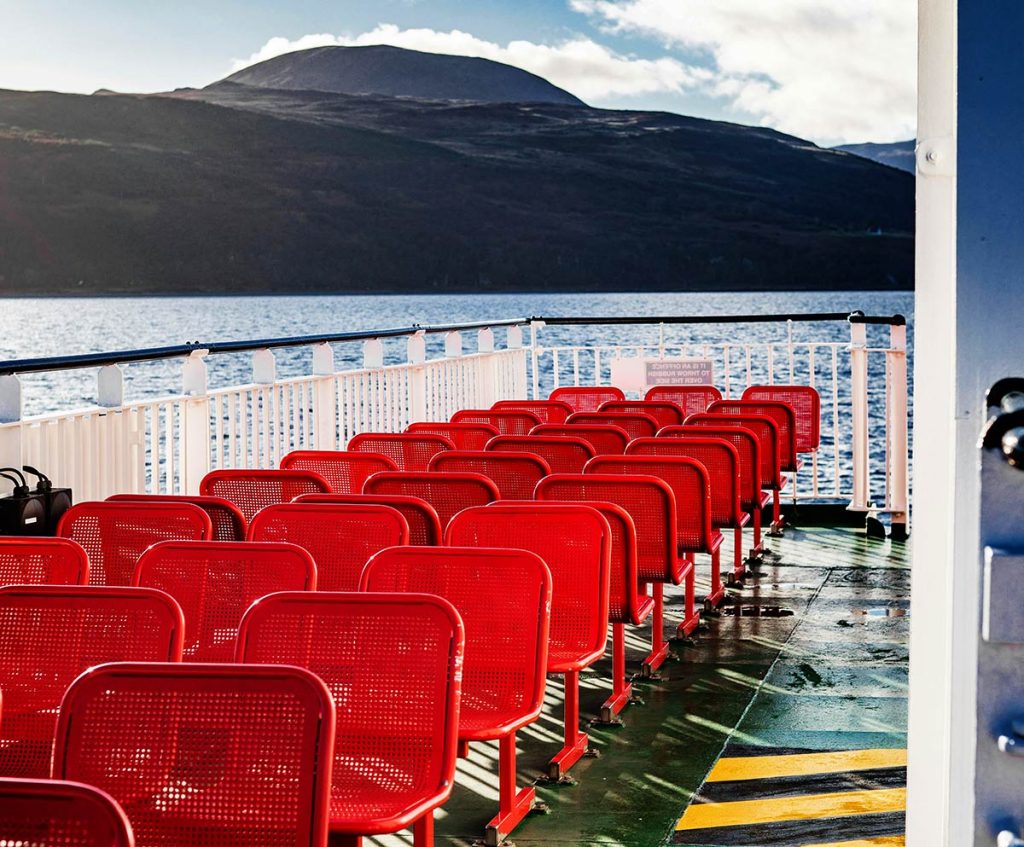
Ferries on the Scrabster route, operated by NorthLink Ferries, are larger and better equipped. There are indoor seating areas, space to move around, and access to food and drinks. On a calm day, standing out on deck as you approach Orkney is part of the experience, giving you a sense of arrival that’s hard to replicate.
By comparison, Pentland Ferries runs smaller vessels from Gills Bay. These are perfectly comfortable for a short journey, but more basic. Seating is simpler, facilities are limited, and the overall feel is more functional than leisurely.
This doesn’t make one “better” than the other—it just depends on what you want. If you see the ferry as part of the trip, Scrabster stands out. If you want to get there efficiently, Gills Bay does the job well.
What the Crossing Feels Like in Different Conditions
This is something many guides skip over, but it can make a real difference.
Both routes cross the Pentland Firth, which is known for strong tidal currents and rapidly changing conditions. On a calm day, the crossing on either route can be smooth and enjoyable, with good visibility and relatively little movement.
When conditions are rough, the experience changes.
On the shorter Gills Bay route, the advantage is simply time – you’re exposed to the conditions for less time. For some travellers, especially those prone to seasickness, this can make the journey more manageable.
On the Scrabster route, the larger vessels used by NorthLink Ferries tend to handle rougher seas more steadily. You may still feel the movement, but the scale of the ship can make it less abrupt.
In reality, neither route guarantees a smoother crossing. The weather on the day is the deciding factor. The most practical approach is to be prepared – especially if you know you’re sensitive to motion.
Where You Arrive and Why It Matters
One of the most important differences between the two routes is where you actually end up in Orkney.
Arriving in Stromness places you on the west side of the mainland. This is ideal if your plans include sites like Skara Brae, the Ring of Brodgar, or the coastal areas around Birsay. It also means you avoid driving across the island later, which can be a real advantage after a long journey north.
Arriving at St Margaret’s Hope is a different experience. You’re on South Ronaldsay, and while the drive to Kirkwall is straightforward, it does add around 25–30 minutes to your journey. You’ll cross the Churchill Barriers, which are interesting in their own right, but it’s still additional travel time.
This matters more than it might seem. After several hours of driving to reach the ferry port, followed by the crossing itself, that extra half-hour can feel significant, especially if you’re arriving late in the day.
On the other hand, if your accommodation is near Kirkwall or on the eastern side of the mainland, Gills Bay can actually be the more direct option overall.
Cost and Practical Considerations
For many travellers, cost is a deciding factor, and this is where Gills Bay often comes out ahead.
- Sailings with Pentland Ferries are typically cheaper, particularly if you’re travelling with a vehicle. Over a return journey, the savings can be noticeable.
- Scrabster sailings with NorthLink Ferries are usually a bit more expensive, reflecting the larger vessels and more extensive onboard facilities.
Availability is also worth considering. During peak months, both routes can fill up, especially for cars. Gills Bay often has more frequent departures, which can make it easier to find a suitable time without having to adjust your entire travel plan.
Which Route Do Most People Choose?
There’s a noticeable pattern in how travellers choose between these two routes.
First-time visitors to Orkney often lean towards Scrabster. It’s widely recommended, the arrival into Stromness is memorable, and the overall experience feels more like the “classic” way to reach the islands. If you’re treating the journey as part of the trip, this route naturally appeals.
Gills Bay, on the other hand, is often chosen by repeat visitors, budget-conscious travellers, or those who prioritise convenience. Once you’ve done the crossing before, the appeal of a faster, cheaper, and more flexible option becomes clearer.
Neither choice is right or wrong; it simply reflects what matters most for that particular trip.
Which Route Should You Choose?
The best choice depends less on the ferry itself and more on your priorities.
If you value comfort, space, and a more atmospheric arrival, the Scrabster route is likely to suit you better. It’s particularly well-suited to first-time visitors or anyone who wants the journey to feel like part of the experience.
If you’re focused on efficiency, saving time, reducing cost, or fitting your travel around a tighter schedule, Gills Bay is often the more practical option.
Your accommodation location, travel timing, and whether you’re bringing a car will all influence the decision. In many cases, one option will clearly fit better once you consider those factors.
A Simple Way to Decide
If you’re still weighing it up, it helps to reduce the decision to a few practical questions:
- Where are you staying in Orkney?
- Are you travelling with a vehicle?
- Do you want a relaxed crossing or the quickest possible journey?
- How important is cost compared to comfort?
Answering those usually points you in the right direction.
So, Which Route?
Both routes are reliable, widely used, and well-suited to travelling to Orkney. You’re not choosing between a good option and a bad one, just between two slightly different ways of making the journey.
For some travellers, the best solution is not choosing at all, but using both. Taking one route on the way out and the other on the return gives you a broader experience and can make planning easier, especially if availability is limited on certain dates.
Whichever route you choose (see how to book it), the ferry crossing marks the real beginning of your time in Orkney. And in a place where travel is shaped by sea and weather, that first step is part of what makes the trip memorable.