The Isle of Hoy is one of the most distinctive islands in Orkney, known for its rugged landscape and quieter, more remote character. Reaching Hoy by ferry is straightforward, but planning matters because services do not operate as simple point-to-point crossings.
There are two main departure points from the Orkney Mainland, but routes can include additional island stops and serve different terminals on Hoy. This affects both journey time and where you arrive, so choosing the right sailing is an important part of planning your visit.
Overview
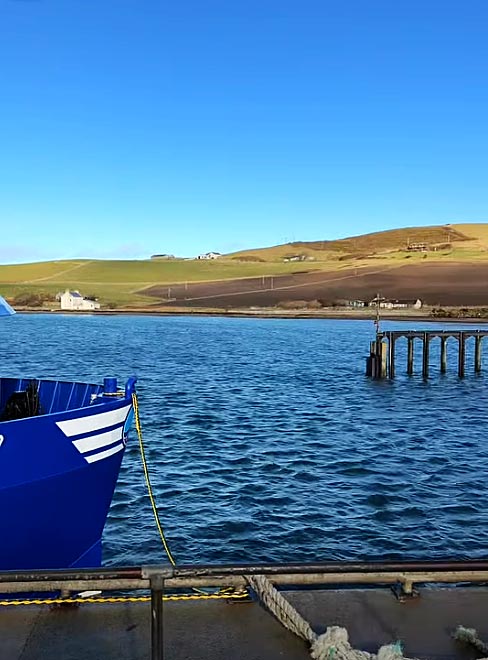
Hoy lies to the southwest of Orkney Mainland, separated by Scapa Flow, a body of water. It is the second-largest island in Orkney, but access is shaped by a small number of ferry routes rather than frequent connections. All services are operated by Orkney Ferries and link Hoy to the mainland and nearby islands through a set of shared routes rather than isolated crossings.
The Isle of Hoy has three active ferry terminals:
- Moaness – on the north coast
- Lyness – on the south side
- Longhope – also in the south, separate from Lyness
These are served by different sailings, so the arrival point is a key part of your journey planning. The Stromness to Moaness route is for foot passengers only, while the Houton route to Lyness and Longhope carries both vehicles and passengers.
How the Ferry Routes Work
Two mainland departure points serve Hoy, but the routes operate as multi-stop services rather than fixed direct crossings.
From Stromness, ferries run to Moaness on the north side of Hoy. Some sailings are direct, while others include a stop at Graemsay before continuing to Hoy. This means journey time can vary slightly depending on the timetable.
From Houton, ferries serve the southern part of Hoy. These sailings may arrive at Lyness, Longhope, or both, depending on the schedule. This route carries both vehicles and passengers and is the main link for local traffic.
In addition to mainland connections, Hoy is also linked to Flotta as part of the same service pattern. Some sailings include Flotta ferry port as an intermediate or connected stop, meaning Hoy is part of a wider multi-island route rather than a standalone destination.
Because of this structure, routes are not interchangeable. The departure port, stopping pattern, and arrival terminal all need to be checked for each individual sailing.
The two routes also differ in how they handle passengers and vehicles. The Stromness to Moaness service is primarily for foot passengers and does not operate as a standard vehicle ferry. In contrast, the Houton route to Lyness and Longhope carries both vehicles and foot passengers and is the main option if you need to take a car to Hoy.
Trip Planning
Ferry services to Hoy operate on fixed timetables, with variations depending on route and day. The Stromness route is shorter and generally easier to use for day trips, although stopping patterns can affect timing.
The Houton route requires closer attention, as sailings may:
- arrive at different terminals
- include additional stops
- vary in frequency
When planning your trip, check:
- exact arrival point (Moaness vs Lyness vs Longhope)
- whether the sailing includes stops (Graemsay or Flotta)
- return options on the same day
If you intend to explore more than one area of Hoy, allow additional time or plan to stay overnight.
Which Route Should You Choose?
The right route to Hoy depends on how you plan to visit and what you want to see.
- Choose Stromness to Moaness if you are travelling on foot and want the shortest, most direct crossing. This route is the best option for day trips and for reaching the main walking areas on the north side of the island.
- Choose Houton to Lyness / Longhope if you are travelling with a vehicle or want to explore the southern part of Hoy. This route offers more flexibility once you arrive, but requires closer attention to the timetable.
- If your sailing includes stops at Graemsay or Flotta, allow extra time, as these are part of multi-stop routes rather than direct crossings.
For most visitors without a car, the Stromness route is the simplest choice. If you need a vehicle or want to cover more ground on the island, the Houton route is the more practical option.
What to Expect on the Journey
Ferries serving Hoy, part of the Orkney Inter-Island ferries network, are smaller than the main routes to Orkney and operate as part of everyday transport for residents, vehicles, and supplies. The Stromness crossing is relatively short and straightforward. If the sailing includes Graemsay, the journey will take slightly longer but follows the same route structure. The Houton route is longer and more variable, reflecting its role as a multi-stop service connecting several locations. Boarding is simple, with small terminals and minimal formalities. Vehicle passengers should still arrive in advance, particularly on busier sailings. Weather conditions can affect services, especially in winter, but operations are generally consistent within local limits.
Things to Do on Hoy
Hoy stands out within Orkney for its landscape, which is higher, steeper, and more rugged than the mainland. Key highlights include:
- Coastal cliffs and walking routes, particularly on the north and west sides of Hoy, where the landscape is steeper and more rugged than the rest of Orkney
- Access towards the Old Man of Hoy, one of the best-known landmarks in the islands
- Walking routes into Rackwick Bay and Beach, a remote and scenic area with a very different character from the mainland
- The Dwarfie Stane, a unique carved rock tomb located inland
- Historical sites around Lyness, including links to naval activity in Scapa Flow
- Quiet inland roads and coastal areas with very low traffic and fewer visitors
Distances between locations are greater than on smaller islands, so your arrival point will influence what you can realistically see in one visit.
In Brief
Visiting Hoy by ferry requires choosing the correct route rather than simply the next available sailing. Services operate from Stromness and Houton, but some routes include additional stops and arrive at different terminals on the island.
Checking the timetable for each sailing, including stopping patterns and arrival points, is essential. If planned correctly, ferry access to Hoy is reliable and opens up one of the most distinctive and least visited parts of the Orkney region.