Planning a trip to Orkney usually starts with one key decision: how you’re going to get there. For most people, that means taking the ferry. While the booking process is not complicated, there are a few important details that can affect your journey, especially if you are travelling with a vehicle or have fixed travel dates.
Unlike booking a train or a flight, ferry travel to Orkney involves limited routes, variable timetables, and seasonal demand. Because of this, understanding the system before you book makes the whole process much smoother. This guide walks you through the steps clearly, so you can choose the right route, book with confidence, and avoid common mistakes.
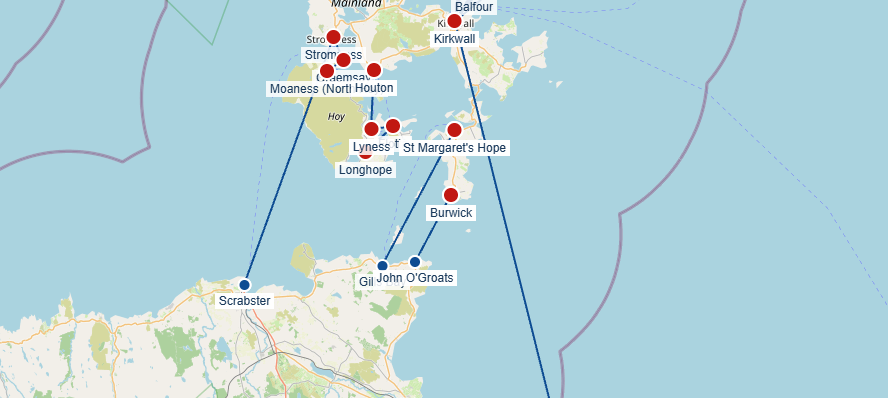
Decide Which Route You’re Taking
Before you look at prices or availability, you need to choose your ferry route. This decision shapes your entire journey. There are three main options:
- Scrabster to Stromness (NorthLink Ferries)
- Gills Bay to St Margaret’s Hope (Pentland Ferries)
- Aberdeen to Kirkwall (overnight service, also operated by NorthLink Ferries)
The Aberdeen route is a longer overnight crossing with cabin options, mainly used by travellers coming from further south who want to avoid driving to the north coast. For most visitors, the decision comes down to Scrabster or Gills Bay, but it is useful to be aware of all three before booking.
Timetables:
- Scrabster → Stromness outbound timetable
- Stromness → Scrabster return timetable
- Gills Bay → St Margaret’s Hope outbound timetable
- St Margaret’s Hope → Gills Bay return timetable
- Aberdeen → Kirkwall outbound timetable
- Kirkwall → Aberdeen return timetable
At this stage, it is worth thinking about your accommodation location, how much driving you want to do, and whether you prefer a faster crossing or a more relaxed journey.
Check Timetables Carefully
Once you have chosen your route, the next step is to check the timetable in detail. Ferry services to Orkney do not run at high frequency, and departure times can vary depending on the day, season, and operational conditions. This means you should always check the specific sailing you intend to take rather than assuming a consistent schedule.
Both NorthLink Ferries and Pentland Ferries publish their timetables online, but it is important to look at both outbound and return journeys together when planning your trip. The Aberdeen service requires particular attention because it operates on a less frequent, overnight schedule. If you are using this route, make sure your entire travel plan is built around the sailing times rather than fitting the ferry in later.
Treat the ferry as the fixed point of your itinerary. Once that is set, everything else becomes easier to organise.
Book Early, Especially with a Vehicle
Ferry bookings to Orkney are generally straightforward, but availability is the key factor.
Car spaces are limited on all routes, and during peak travel periods, they can fill up well in advance. This is especially true in spring and summer, when demand is highest.
When booking, you will typically need to provide:
- Passenger details
- Vehicle type and size
- Travel dates and sailing time
- Return journey details
If you are travelling with a campervan, motorhome, or larger vehicle, booking early becomes even more important, as these spaces are more limited.
Passenger-only tickets are usually easier to secure, but popular sailings can still sell out.
As a general rule, once your travel dates are fixed, it is best to book immediately rather than waiting.
Choose the Right Ticket Type
When booking your ferry, you will need to select the correct ticket type based on how you are travelling.
In most cases, you will be choosing between:
- Foot passenger ticket
- Vehicle ticket
- Cabin or seating options (on Aberdeen overnight sailings)
On the Aberdeen route operated by NorthLink Ferries, cabin selection is particularly relevant, as this is an overnight journey and having a private space can make a significant difference to comfort.
For shorter crossings from Scrabster or Gills Bay, the process is simpler, with standard seating available onboard.
It is important to ensure your vehicle details are entered accurately, as ferry operators use this information to allocate space on the car deck.
Plan Your Timing and Allow for Delays
Getting to the ferry on time is just as important as booking it.
Ferry operators such as NorthLink Ferries and Pentland Ferries require passengers to check in before departure, particularly when travelling with a vehicle.
You should aim to arrive at least 30 to 60 minutes before sailing, and even earlier during busy periods.
Common timing issues include:
- Underestimating the driving time to the port
- Not allowing for road delays or weather
- Arriving too close to check-in cut-off times
- Forgetting to plan the return journey properly
Important reminder: Always allow extra time for travel to Scrabster, Gills Bay, or Aberdeen, as these ports are often reached via long rural roads.
Treat the ferry as a fixed departure time that you must work around, not something flexible in your schedule.
Weather and Seasonal Conditions
Weather plays a much bigger role in ferry travel in Scotland than many visitors expect. While services generally run reliably, conditions in the Pentland Firth can change quickly, and this can affect both comfort and, occasionally, timing.
The waters between mainland North Scotland and Orkney (Mainland) are known for strong tides and exposed crossings. On calm days, both the Scrabster and Gills Bay routes feel straightforward and predictable. However, in stronger winds or rougher seas, the experience can be noticeably different, especially if you are not used to sea travel.
On the Scrabster to Stromness route, operated by NorthLink Ferries, the larger vessels tend to handle rougher conditions more steadily. Movement may still be felt, but the size of the ship generally provides a more stable experience over longer crossings.
The Gills Bay to St Margaret’s Hope route, run by Pentland Ferries, is shorter, which can help reduce exposure time in poor conditions. However, because the vessels are smaller, motion can feel more pronounced when the sea is rough.
The weather is also the main reason for occasional schedule disruption. While cancellations are not common, sailings can be delayed or adjusted depending on conditions. This is more likely during winter months or periods of strong winds.
If you are travelling on a fixed itinerary, it is worth building some flexibility into your plans. Checking the forecast on the day of travel is always sensible, and allowing extra time for connections or onward driving can reduce stress if conditions are less than ideal.
In practice, most crossings go ahead as planned, but understanding the role of weather helps set realistic expectations and makes the journey feel less unpredictable.
Don’t Forget Inter-Island Ferries
If you plan to explore beyond the Orkney mainland, you will also need to consider inter-island ferries operated by Orkney Ferries. These services connect the mainland with smaller inhabited islands and are an essential part of travel within Orkney. Booking procedures are slightly different from mainland ferries, and timetables are more limited, so it is worth checking them early if island visits are part of your plan. However, this is a separate layer of travel and should be planned after your main crossing is booked.
Booking Becomes Simple Once You Understand the System
Booking a ferry to Orkney is not difficult once you understand how the system works. The most important decisions are choosing your route, checking timetables carefully, and booking early if you are travelling with a vehicle. Each route offers a slightly different experience, whether it is the more traditional crossing into Stromness, the faster Gills Bay option, or the overnight journey from Aberdeen. Once you match the route to your travel plans, the rest of the process becomes straightforward.
The key is to treat the ferry as the foundation of your trip. Once that is in place, everything else can be built around it with much more clarity and confidence.